Field Notes
Here you'll find observations from life in Idyllwild, practical real estate insights, stories behind the sale, and the occasional tale about birds, bears, and everything that makes these mountains home.
Updated regularly. Except when it isn’t. Consider this an unofficial mountain-town schedule.
Featured Field Note - Scroll down for more entries
The Responsibility of Being Trusted
There's something I've come to understand after more than 25 years in real estate: representing someone isn't simply about helping them buy or sell a property. It's about accepting responsibility for the trust they've placed in you.
And I don't take that lightly.
I've been thinking lately about the idea of stewardship. A steward doesn't own what has been entrusted to their care. Their responsibility is to protect it, respect it, and act in its best interests.
I believe that's a beautiful way to think about real estate representation.
When someone asks me to represent them, they're inviting me into a decision that may affect their finances, their family, their future, and their sense of security. Sometimes they're excited. Sometimes they're overwhelmed. Often, they're both.
I've never really thought of myself as a salesperson. I see myself as an experienced and knowledgeable guide, someone who helps people navigate a complicated process, understand their options, and make informed decisions with confidence.
My responsibility isn't to steer someone toward the outcome that's most convenient or financially rewarding for me. It's to help them recognize potential consequences and make decisions that genuinely serve their interests.
Sometimes that means delivering advice they may not want to hear. Sometimes it means recommending patience when someone is eager to move forward. Sometimes it means advising a buyer to walk away from a property they love, or encouraging a seller to reconsider expectations that aren't supported by the market.
And sometimes the best advice I can give someone is that they shouldn't buy or sell at all.
That may not be the fastest way to earn a commission, but I've never believed that a successful transaction should be measured solely by whether a property changes hands.
A successful transaction is one in which the people involved feel informed, respected, protected, and confident that their interests were genuinely represented.
Of course, real estate involves negotiation. Interests don't always align, difficult decisions must be made, and protecting a client's position sometimes requires being firm. Stewardship doesn't mean being passive or avoiding conflict. It means remembering whose interests I'm there to serve, even when circumstances become complicated.
I also believe that how we treat people throughout the process matters. Buyers, sellers, other agents, escrow officers, inspectors, and everyone else involved are human beings navigating their own responsibilities and challenges.
Professionalism doesn't require us to become adversaries. We can negotiate firmly, disagree respectfully, and still work toward an outcome that serves the people who have entrusted us with their representation.
Over the years, I've learned that the greatest satisfaction in this work rarely comes from the commission check. It comes from knowing that I helped someone navigate an important chapter of their life with greater clarity, confidence, and peace of mind.
That's the kind of real estate practice I believe in.
I don't need every conversation to become a transaction. I don't need every opportunity to become a listing. And I don't need someone to make a decision before they're ready.
Because I've also come to appreciate that every conversation has value of its own.
A question from a buyer, a conversation with a seller, or an exchange with another real estate professional can introduce a perspective I hadn't considered or invite me to examine something more deeply. In fact, many of my Field Notes begin with an ordinary conversation that stays with me long after it's over.
One of the things I love most about this business is that it never stops teaching me. Even after 25 years, I still learn something from every transaction. Sometimes it's about the market, a property, or a particularly complicated situation. Other times, it's something about myself, my assumptions, or how I want to show up for the people who trust me.
Experience has given me knowledge and confidence, but I hope it never takes away my curiosity or my willingness to grow.
Ultimately, I want the people who work with me to know that my guidance isn't shaped by what I stand to gain, but by what I believe is right for them.
Because being trusted is a privilege. Honoring that trust is the responsibility.
October 4, 2026
Short-Term Rentals in Idyllwild
I started writing a Field Note about short-term rentals in Idyllwild and quickly realized the subject deserved its own page.
If you’re considering buying, selling, or operating a short-term rental here, I’ve put the current rules, permit information, fees, fines, and helpful County resources all in one place.
October 3, 2026When “Development Potential” Isn’t So Simple
Large acreage often gets described as having “development potential,” but those two things are not necessarily the same. Before a property can be marketed to developers at a premium, there are a number of practical and regulatory questions that need to be answered.
In Riverside County, subdivision and development can involve much more than simply having enough acreage. Zoning and the General Plan designation have to support the proposed density and parcel sizes, and many additional issues can affect whether a subdivision is actually feasible.
Access can be a major factor. If a property fronts a state highway, proposed access changes or increased development impacts may involve additional review. Driveways, drainage, grading, utilities and impacts to the roadway can all come into play.
Mountain properties can bring even more questions: fire apparatus access, road width and grade, turnarounds, all-weather surfaces, water supply, drainage, topography and emergency access.
Where sewer is unavailable, septic feasibility matters too. A proposed subdivision may need to demonstrate that the individual lots can support wastewater systems and that adequate water is available.
There may also be private easements, recorded restrictions, utility limitations, environmental concerns or other conditions that affect what can realistically be built.
And this is where sellers need to be careful.
Just as I would not market a residential property as having a new roof, permitted addition or functioning septic system without evidence to support that representation, I would not market land as having meaningful development potential simply because someone believes it does.
If a seller wants a buyer to pay a premium based on subdivision or development potential, the seller should be prepared to support the qualifying factors behind that claim. Depending on the property, that might mean zoning research, title and easement review, preliminary planning consultation, access analysis, septic or water feasibility, surveys, engineering or other professional investigation.
None of that means a property cannot be developed. It means the feasibility has to be established.
And sometimes, after engineering, entitlement, road improvements, fire-access requirements, utilities, septic systems and other infrastructure are considered, a technically possible project may simply become cost prohibitive.
That is why I think sellers are better served by distinguishing between acreage and demonstrated development potential. They are not the same thing.
Development potential has value when the facts support it.
September 10, 2026El Niño, Flash Floods, and Mountain Living
Around here, we spend a good part of the year wishing for rain.
There have also been times when we wished, quite sincerely, that it would please stop.
With El Niño strengthening in the Pacific and predictions pointing toward a potentially very strong event this fall and winter, I’ve been thinking a lot about rain lately. Not because El Niño guarantees that Idyllwild will have a wild, wet winter. It doesn’t.
But living on this mountain for more than 25 years has taught me that it’s worth paying attention.
And I learned one particular lesson about water the hard way.
For years, I didn’t really think of flash flooding as something I needed to worry much about. I live on top of a mountain. Water goes downhill, right?
Turns out that was a pretty ridiculous way to look at it.
Because yes, the water does go downhill.
The problem is what happens when you happen to be in its way.
The storms I remember
Most longtime residents remember the Valentine’s Day storm of 2019. The rain was extraordinary. Sections of both Highway 74 and Highway 243 were badly damaged, portions of roadway disappeared, and for a while our little mountain community felt remarkably cut off from the rest of the world.
It was one of those events that reminds you how vulnerable mountain roads can be.
But strangely, some of the most remarkable mud and debris I have ever seen on our local residential streets came during a much more localized flash flood last year.
Suddenly, little side streets were covered in mud, rocks and debris that had washed down from private lots and hillsides. Places where I had never really thought about runoff were moving enormous amounts of water.
My own property flooded.
Some of it was undoubtedly just the sheer volume of rain, although changes to neighboring landscaping had also altered the way water reached my property.
And that is something I think about now.
We make changes to our properties during the dry months. We landscape. We grade. We create paths, berms, retaining areas and planting beds. We extend something here or redirect something there.
Our neighbors do the same.
When the ground is dry and hard and it hasn’t rained substantially in months, it can be almost impossible to know exactly what those changes will mean when several inches of water suddenly arrive.
Then the rain comes.
And the water makes its own decisions.
The day I stopped underestimating flash floods
That same flash flood taught me something else.
I was driving home on Highway 243 during the storm. As I approached an area where the mountain rises sharply on the high side of the highway, a wall of muddy water suddenly came down across the road and overtook my truck.
I could see nothing.
Absolutely nothing.
Stopping felt dangerous because I had no idea what might be coming behind me. Continuing felt equally dangerous because I couldn’t see whether there was another vehicle stopped ahead.
For a moment, my actual thought was:
“Seriously? This is how I’m going to die?”
Obviously, I made it through.
But I will never look at a flash flood warning quite the same way again.
So here is perhaps the simplest advice in this entire Field Note:
When that flash flood warning starts blasting from your phone, pay attention to it.
Don’t decide you can probably make it home before things get bad.
Don’t assume that because you are on a mountain, flooding isn’t a concern.
And unless you absolutely have to be somewhere, don’t drive.
Wait it out.
A flash flood doesn’t necessarily look like a slowly rising river. On a mountain, water, mud, rocks and debris can come down a slope and across a road frighteningly fast.
Preparing our properties
I’ve looked at my own property very differently since then.
I’ve had gutters repaired, replaced and extended. I’ve dug trenches where I know water tends to travel. I keep sandbags. I look at drainage differently than I used to.
But I also understand now that preparation has limits.
You can make an educated guess about where water will travel. You can look for old drainage patterns. You can remember where water pooled during previous storms. You can clean gutters and culverts, direct downspouts away from structures, check roofs and look carefully at slopes.
What you cannot always do is predict exactly what an extraordinary amount of rain will do.
That doesn’t mean we shouldn’t prepare.
It means we should.
Before winter, this is a good time to walk around your property with rain in mind.
Look uphill as well as downhill.
Where would water come from?
Where does it normally leave?
Has anything changed since last winter?
Have you or a neighbor altered landscaping or drainage?
Are gutters actually carrying water away from the house, or simply dumping it somewhere else where it can become another problem?
Are there areas where leaves, pine needles, dirt or debris could block drainage?
Do you have a place where sandbags might help if you suddenly need them?
And if you live below a steep slope, pay particular attention.
Sometimes the roads are the bigger problem
Preparing the house is only part of mountain living.
During serious storms, getting on or off the mountain can become the bigger issue.
We have seen rockfall, mud, downed trees, flooded sections of roadway and significant damage to our highways. A perfectly safe house doesn’t help much if you are somewhere else and can’t safely get home.
That is why I now pay much closer attention when significant rain is forecast.
Gas in the car. Food at home. Flashlights and batteries ready. Phones charged. Basic supplies in place.
Nothing dramatic.
Just the same kind of quiet preparation most of us already do when snow is coming or fire conditions become concerning.
Water deserves a little respect
I love the rain.
After months of heat and dry ground, few things smell better than the first real rain moving through the pines.
Our forests need it. Our wells need it. Our entire mountain needs water.
But I've developed considerably more respect for what water can do when too much of it arrives too quickly.
Maybe that is one of the recurring lessons of living in Idyllwild.
We prepare for fire.
We prepare for snow.
We prepare for wind and falling trees and power outages.
And sometimes we prepare for water.
Not because every forecast becomes a disaster. Most don’t.
But because the mountain has a way of occasionally reminding us that nature gets the final vote.
And still, after all the storms, road closures, power outages and other inconveniences this mountain can throw at me, there is nowhere else I would rather call home.
September 5, 2026Keeping the Wild in Idyllwild
Every so often, the idea comes up that Idyllwild should incorporate and become its own city.
I understand the appeal.
The argument usually sounds something like this: Idyllwild generates a lot of money through tourism, lodging, property taxes and local businesses. If we incorporated, more of that money could stay here instead of going to Riverside County. We would have more local control. Decisions affecting Idyllwild could be made by people who actually live here.
On the surface, all of that sounds pretty good.
But I have lived here for a very long time, and before we turn Idyllwild into a city, I think we should ask a much bigger question:
What problem are we actually trying to solve?
And then I want to see the math.
Because becoming a city does not simply mean keeping more money in Idyllwild. It also means keeping more responsibility here.
Idyllwild-Pine Cove had a population of 4,163 at the 2020 Census. We are a very small mountain community with a disproportionately large tourism economy, a limited commercial base, aging infrastructure, difficult terrain, wildfire exposure, snow, road issues and a population that changes dramatically depending on the season and the weekend.
That is a very different financial picture from simply saying, “Look at all the money Idyllwild generates.”
Yes, Idyllwild Generates Revenue
There is no question that tourism generates significant tax revenue here.
Riverside County currently collects a 10 percent Transient Occupancy Tax on stays in hotels, motels, bed-and-breakfasts and short-term rentals in unincorporated areas of the county. The tax is charged not only on the room rate, but also on mandatory charges such as cleaning and reservation fees.
Given the enormous number of vacation rentals, traditional lodging properties and visitors we have relative to our permanent population, it is reasonable to assume that Idyllwild contributes substantial TOT revenue.
That is probably one of the strongest arguments supporters of incorporation can make.
But there is an important piece missing from the statement that this money could simply “stay in Idyllwild.”
California does not allow a newly incorporated city to take revenues away from a county while leaving the county with the same expenses and responsibilities.
Incorporation has to go through the Local Agency Formation Commission, or LAFCO, and part of that process is determining whether the proposed city is financially viable and whether the transfer of revenue and services is financially workable.
In other words, there is no giant Idyllwild bank account sitting in Riverside waiting for us to bring it home.
If revenue comes home, responsibilities come with it.
Cities Cost Money
A city needs government.
That sounds obvious, but I think it gets lost in discussions about “local control.”
A City of Idyllwild would need some form of administration. It would need budgeting and accounting. Legal counsel. Elections. Public meetings. Records compliance. Municipal ordinances. Planning functions. Insurance. Contracts. Staff or consultants.
Some services could presumably continue to be provided by Riverside County or special districts under contracts, but those contracts would still have to be paid for.
And whatever functions the city took over would become our financial responsibility.
That means the meaningful question isn't:
How much money does Idyllwild generate?
It is:
How much money would a City of Idyllwild receive after all of the fiscal arrangements required for incorporation, and how much would it cost to run the city and provide the services residents expect?
Those are two very different questions.
Incorporating Isn't Free, Either
Even exploring incorporation costs money.
Riverside LAFCO charges substantial fees for jurisdictional changes, and those fees can increase if additional staff time, studies or outside work are required.
A serious incorporation effort also requires financial analysis. There are legal descriptions, mapping, fiscal studies, environmental review questions and an enormous amount of administrative work before voters ever get to decide whether they want a city.
So when someone says we should incorporate, one of my first questions is very practical:
Who is paying to find out whether we can afford to incorporate?
And after that:
Who pays to run the city once we've created it?
I have heard people say that our taxes would not necessarily increase, and technically that may be true. Incorporation itself does not magically create a new property tax bill.
But that does not make the financial question disappear.
If existing revenues were not enough to support the government and services residents wanted, something would have to give.
Services would have to be reduced, another source of revenue would have to be found, or voters and property owners could eventually be asked to approve additional taxes, fees or assessments.
Before I support creating a city government, I would like to know how likely that scenario is.
Not theoretically.
For Idyllwild.
Show Me Both Sides of the Ledger
If someone presents a serious proposal to incorporate Idyllwild, I want to see a complete financial picture.
How much property tax generated in the proposed city boundaries would actually flow to the new city?
How much sales tax?
How much TOT?
How much state revenue?
What other fees or revenues would exist?
What would Riverside County retain?
What financial arrangements would be required as part of the incorporation?
Which services would the city assume?
Which would remain with the county?
Which would be contracted back to the county or another agency?
How much would administration cost?
Planning?
Legal services?
Finance?
Elections?
Insurance?
Road maintenance?
Snow removal?
Code enforcement?
Emergency preparation?
And what happens during a bad year?
Idyllwild depends enormously on people coming here.
What happens after a wildfire?
A prolonged road closure?
A recession?
A tourism downturn?
A disaster that dramatically reduces local business activity for a year or two?
A city still has bills when visitors stop coming.
Before we create one, I would want to know whether the financial model works during the bad years, not just the good ones.
Local Control Sounds Good. But Control Is Still Control.
This is where my objection becomes less about numbers and much more personal.
I love Idyllwild.
Not the polished version of it.
The real one.
I love old cabins that lean a little and houses that have been added onto over generations.
I love strange parcels and impossible driveways.
I love tiny houses tucked between enormous trees.
I love roads that don't quite feel like roads.
I love old commercial buildings that would probably never be designed the same way today.
I love hand-painted signs, local characters, artists, musicians, odd little businesses and homes that don't look anything like the house next door.
I love that so much of Idyllwild feels as though it happened organically rather than being planned.
There is a looseness here.
An independence.
A little bit of disorder.
And I think some of that is precious.
I have spent more than two decades working in real estate here. I have been inside thousands of mountain homes. I have crawled through old houses, walked strange property lines and seen buildings that tell the history of this place better than any brochure ever could.
Idyllwild has never been particularly tidy.
I don't want it to be.
There is already plenty of regulation governing property, construction, land use, fire safety, short-term rentals and businesses. We are certainly not living without government.
But I am not convinced that adding another layer of local government automatically makes a place better.
More local control also means more people deciding what Idyllwild should look like.
More ordinances.
More rules.
More political battles.
More pressure to solve things through regulation.
And perhaps, eventually, more pressure to make Idyllwild look and behave like somebody's idea of what a mountain tourist town should be.
That worries me far more than whether every dollar collected here is spent here.
Part-Time Owners Have a Stake Here Too
Some of the people enthusiastic about incorporation are part-time residents.
They absolutely have a stake in this community. They own property here. They love Idyllwild. They contribute to the economy and care about its future.
But there is a perspective that comes from living and working here every day that is different from experiencing Idyllwild primarily as a retreat.
“More local control” can sound wonderful when you're imagining better services, more beautification, more enforcement or more say in what happens here.
But those of us who live here full time also have to live with every new ordinance, every regulatory decision, every fee, every budget shortfall and every unintended consequence.
We don't just visit the result.
We live inside it.
That doesn't mean one group should have a voice and another shouldn't.
It means we should be very careful about romanticizing incorporation.
Idyllwild Is Already Something Special
Perhaps incorporation would ultimately make financial and governmental sense.
I am open to seeing the numbers.
But I am not willing to assume that becoming a city is progress simply because cities have more local governmental control.
Sometimes not changing something is also a choice.
And sometimes what looks inefficient on paper is part of what makes a place wonderful in real life.
Idyllwild has survived for generations without becoming a city.
It grew into this peculiar, beautiful, sometimes frustrating mountain village through a mixture of private property, county government, special districts, local organizations, businesses, volunteers and an enormous amount of community involvement.
It isn't perfect.
Neither are cities.
So before we create a new government because more of “our money” might stay here, I want to know exactly how much money we're talking about.
I want to know what comes with it.
I want to know what it costs.
I want to know what problem incorporation solves that we cannot solve another way.
And perhaps most importantly, I want us to think very carefully about what we could lose.
Because the thing I would most hate to see governed out of existence is the very thing that made so many of us fall in love with this place.
The irregularity.
The independence.
The imperfection.
The freedom to be a little strange.
The trees that were here before us and will hopefully be here after us.
The old cabins.
The dirt.
The darkness.
The quiet.
The people who came here because they didn't particularly want to live somewhere polished and predictable.
There is still something wild about Idyllwild.
I'd like to keep it that way.
A Goodbye to Dolly Parton, From Idyllwild
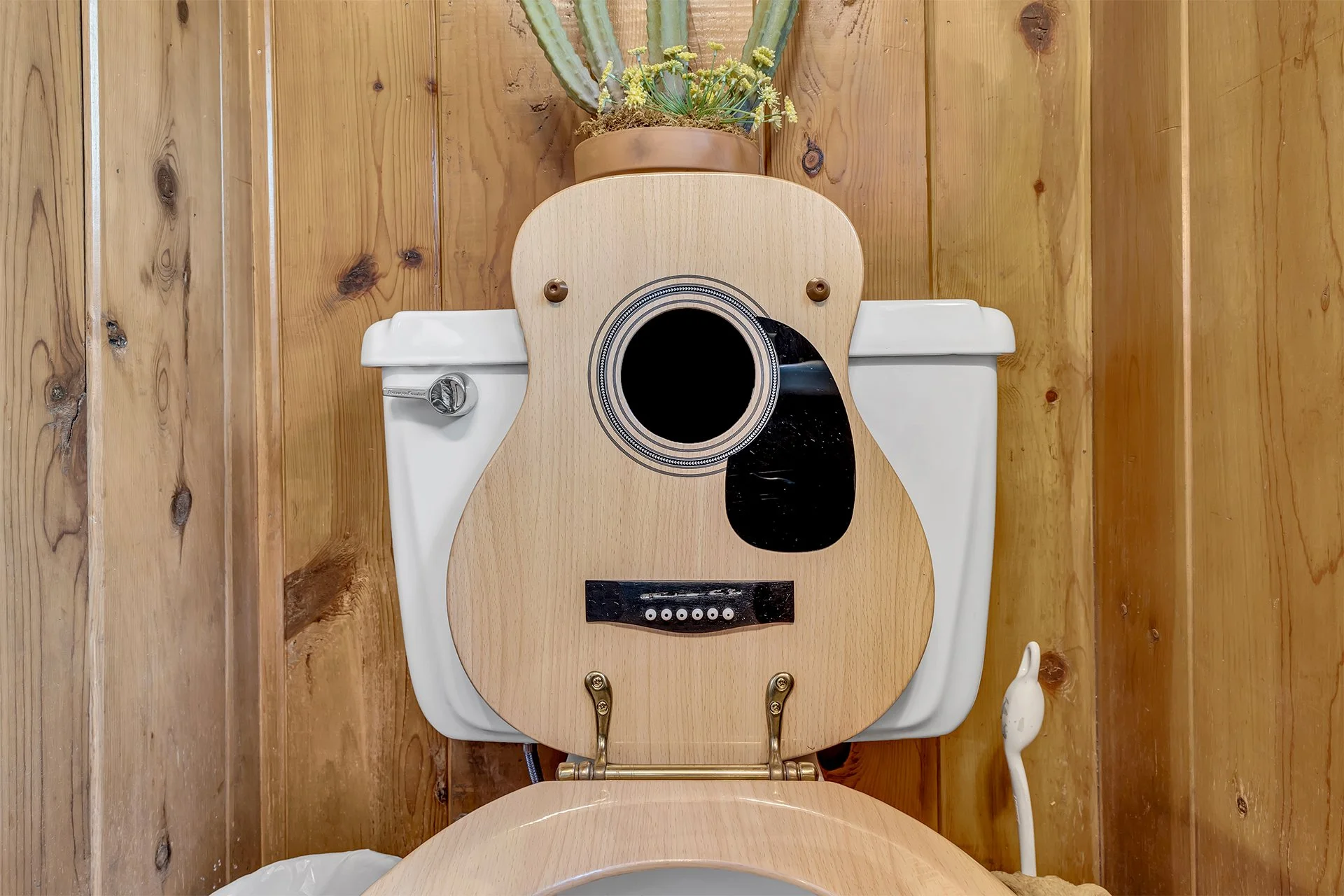
Dolly always had a sense of humor - custom toilet lid in her Idyllwild cabin.
A Little Piece of Dolly’s Idyllwild Story
August 25, 2026
I never met Dolly Parton.
But when I heard today that she had died, I cried.
I know I’m hardly alone in that. Dolly somehow made millions of people who never met her feel like we knew her.
I think I was lucky enough to get just a little closer.
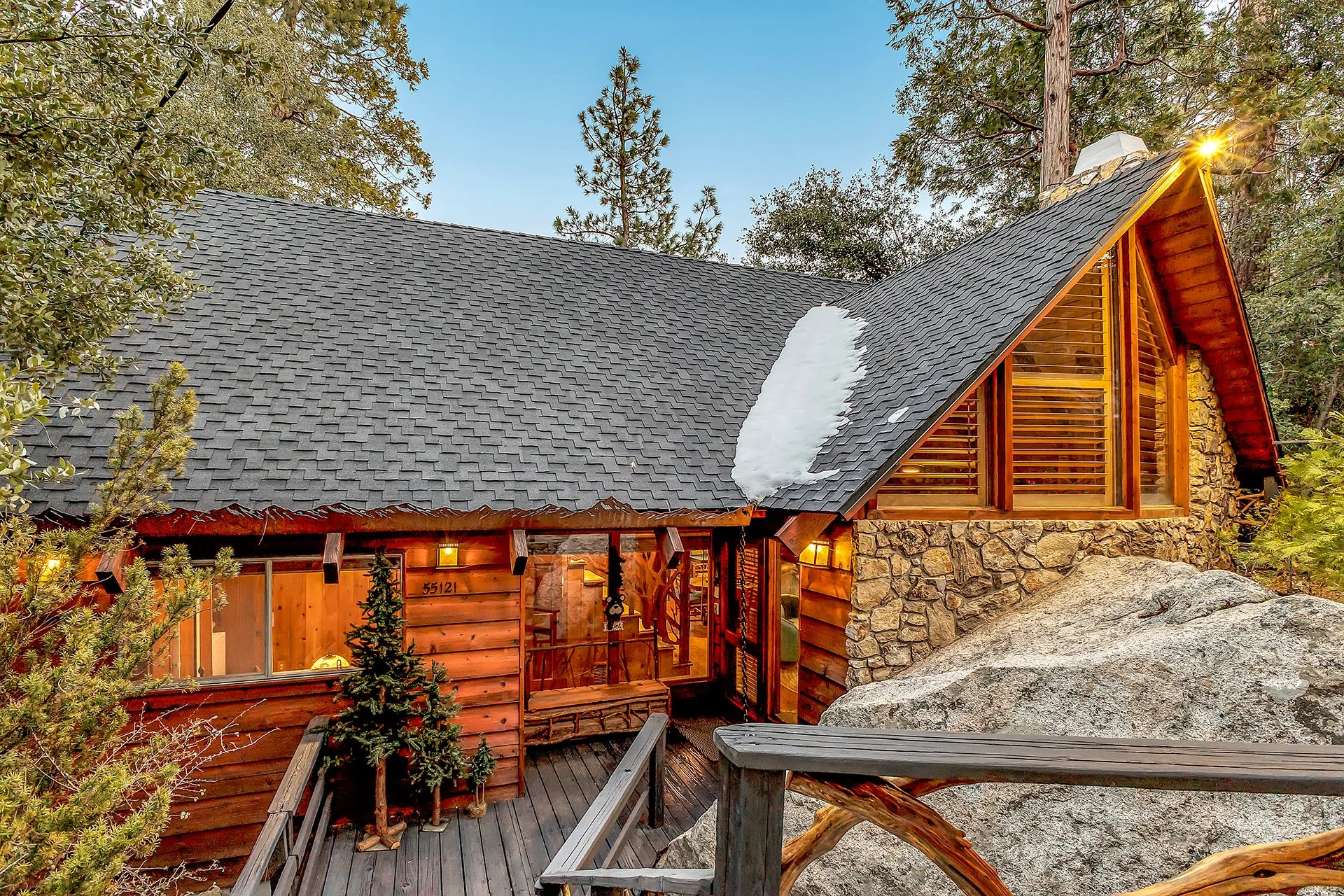
I sold Dolly’s former Idyllwild home twice in one year.
Dolly purchased the cabin because Idyllwild reminded her of the mountains of her native Tennessee. It was close enough to Los Angeles that she could visit when she wanted to get away and have a little taste of the mountain life she had known as a child.
Longtime locals remember Dolly spending time here. I’ve heard stories of her walking into town with her mother, who spent quite a bit of time at the cabin. And apparently Dolly wasn’t disguising herself for the occasion. She walked into town in full makeup, colorful clothes and those iconic high heels.
I’ve also been told she especially loved the local Chinese restaurant.
I love knowing that Dolly was just here. Walking our streets. Eating Chinese food. Enjoying these mountains.
Eventually, Dolly gifted the property to a charity. When the charity later sold the home, nothing was removed.
And I mean nothing.
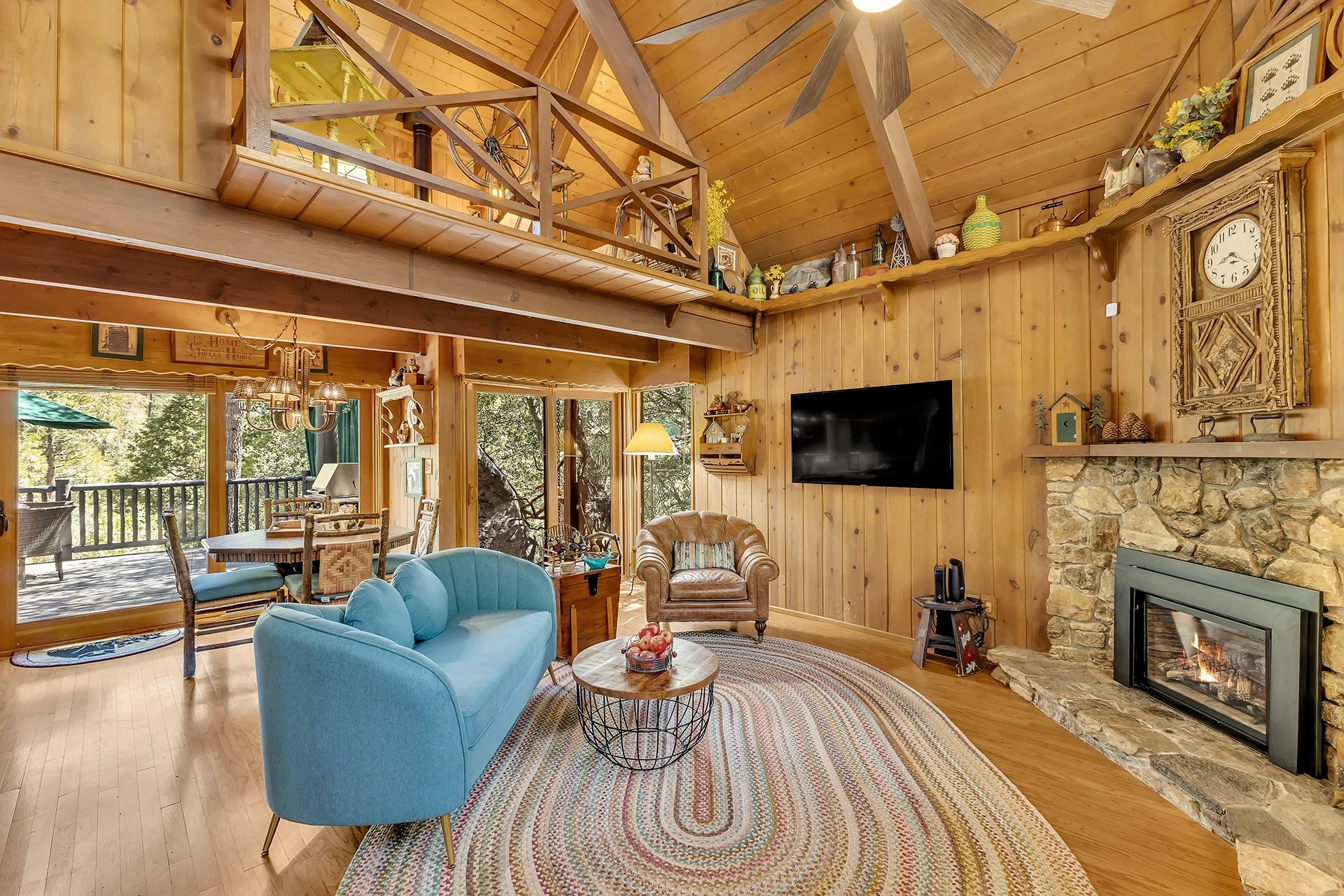
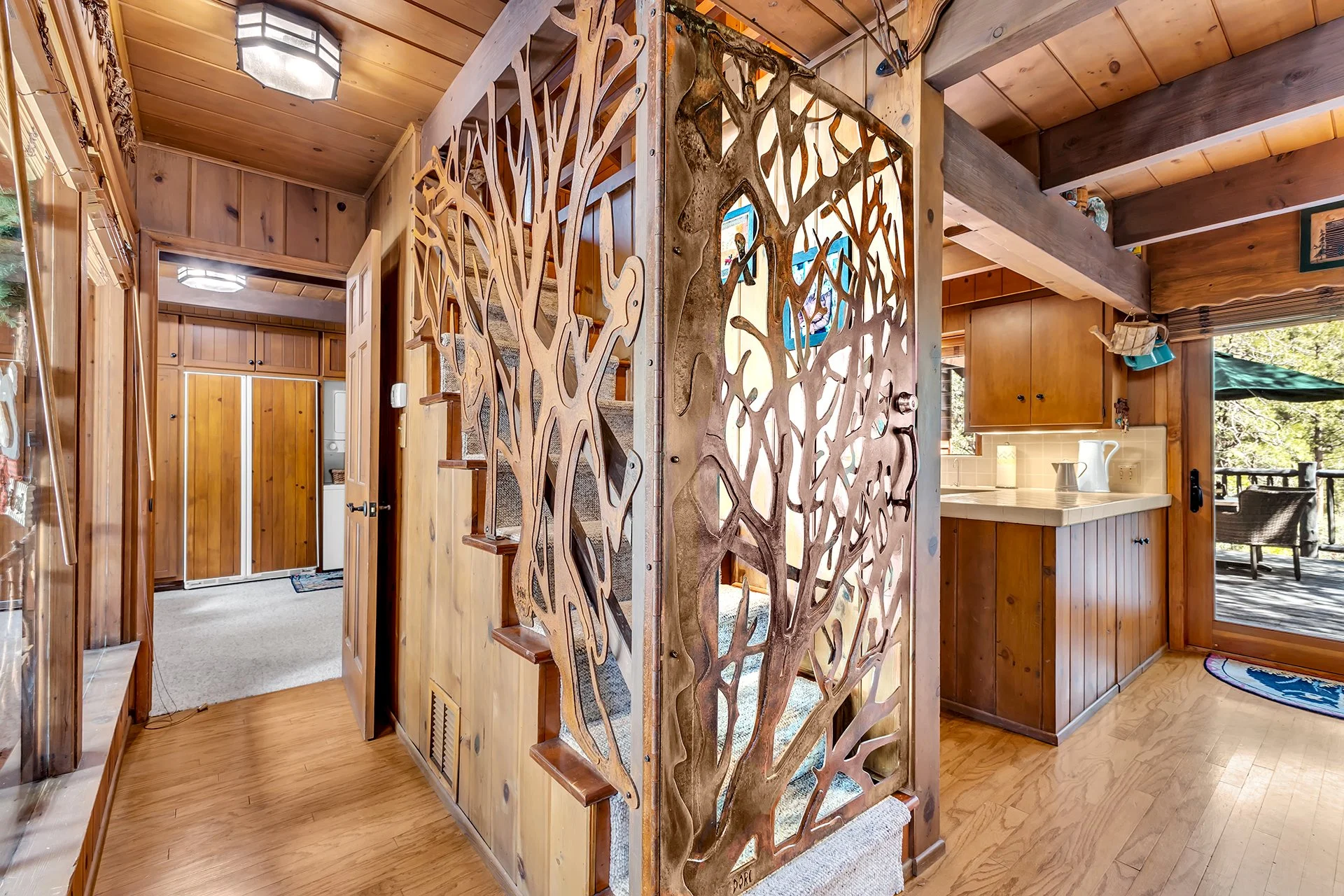
The furnishings, artwork, collectibles and all the little things that make a house personal had been chosen or placed there by Dolly.
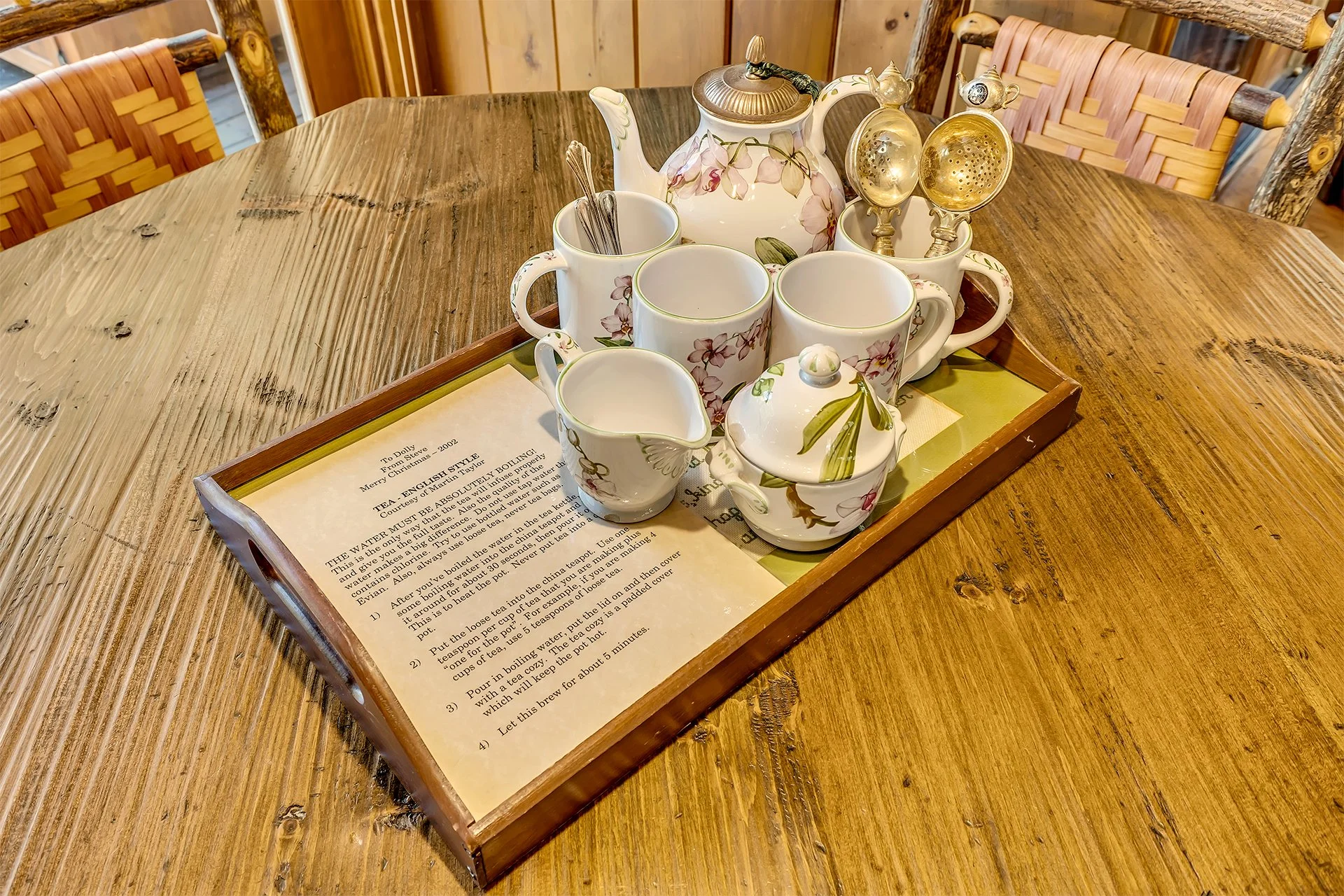
There was a beautiful tea set a friend had given her, still accompanied by the original gift letter explaining how to use it.
There were collectibles that gave little glimpses into her tastes and personality.
And then there was the custom toilet seat lid shaped like a guitar.
Of course, Dolly Parton had a guitar-shaped toilet seat.
These weren’t things assembled later to turn a celebrity’s former home into a museum. They were simply things Dolly had chosen, received, used and left behind.
Those little details made her presence in the cabin feel very real.
My clients absolutely loved Dolly, and they loved the cabin. They bought it with every intention of making it their own.
But while we were in escrow, I found another Idyllwild home that simply suited them better.
So, they did something a little unusual.
They bought both.
Over the next several months, they gave Dolly’s cabin some much-needed attention. They put on a new roof, stained the decks and took care of other deferred maintenance. They also hung an autographed image of Dolly in the house, a little acknowledgment of the woman who had loved the cabin before them.
Less than a year after they purchased it, they asked me to sell it.
We received multiple offers, and I had the privilege of selling Dolly’s cabin for the second time in a year.
Another wonderful couple bought it.
And they absolutely love it.
That makes me especially happy today.
Because houses have histories. People come and go, and every once in a while, you get to be the person entrusted with carrying a little piece of that history from one owner to the next.
For a short time, I got to do that with a little piece of Dolly’s history.
But that’s not really why I’m sad today.
I’m sad because Dolly was a light in a sometimes-dark world.
She was funny without being cruel. Outrageous without taking herself too seriously. She was generous, she loved people, and she seemed to understand that making someone smile was not a frivolous thing to do with your life.
And Dolly changed the world in the small ways that truly mattered.
She made sure children had books to read. She helped people when they needed help. She even created a program that paid middle school kids to stay in school.
None of those things were as glamorous as the rhinestones, the enormous hair or the stages she performed on. But I think they tell us far more about who Dolly was.
She had an enormous life, and she used it to make other people’s lives a little better.
Dolly wanted to bring people joy.
And at that, she succeeded beyond measure.
And today, there is something incredibly powerful about knowing that millions of people I will never meet are feeling this same loss.
We’re remembering different things. We have different stories about why she mattered to us. But we’re grieving the same woman.
Dolly spent her life bringing people together through music, laughter, generosity and kindness.
Somehow, today, she’s bringing us together again in our grief.
Brené Brown said it beautifully:
“You left our hearts better than you found them. Thank you, Dolly.”
I think that’s exactly why so many of us are grieving someone we never actually knew.
I didn’t know Dolly.
But I got to walk through the little mountain home she chose because it reminded her of where she came from. I got to see some of the things she loved and some of the things other people had given her with love.
And I got to hear the stories of Dolly walking through our little town in high heels with her mom.
Today, all of that feels like a gift.
I’m genuinely sad she’s gone.
I’m glad she found Idyllwild.
I’m glad a little piece of her will always be part of this mountain’s history.
I’m very glad she was here.
And I will always love you, Dolly.
August 24, 2026Keep an Eye on Your Trees
Riverside County’s local emergency declaration for bark beetle infestation in Idyllwild and Pine Cove, as well as Goldspotted Oak Borer in Idyllwild, remains in effect.
If you have mature pines or oaks on your property, keep an eye out for changes in the canopy, thinning or discolored foliage, dying branches, or other signs of decline. Catching a problem early may give you more options for protecting the tree and surrounding trees.
The Idyllwild Grinding Facility accepts bark-beetle-infested wood, but it must be identified and kept separate from other green waste. The facility does not accept material infested with Goldspotted Oak Borer.
If you’re concerned about the health of your trees and aren’t sure who to call, reach out to me. I’m happy to provide a list of qualified local arborists and other preferred professionals who can assess your trees and recommend next steps.
Old Houses Are Allowed to Be Old
August 22, 2026
“Old house” can mean a lot of different things in Idyllwild.
We have homes built in nearly every decade since the turn of the last century. Some are tiny early cabins that were built when Idyllwild was still very much a mountain outpost. Others came along in the decades that followed, with a particularly big building boom in the 1960s. So when you're looking at homes here, you might walk through a cabin that's more than 100 years old in the morning and a relatively modern home that afternoon.
The oldest home I have personally sold was built in 1923.
And when I say old, I mean old.
It was a tiny cabin in remarkably original condition. There was no central heating system. It still had knob-and-tube wiring. Even the original water-heating system was there: a large tank mounted high on the kitchen wall, with pipes running into the fireplace so the fire could heat the water.
By modern standards, there was a very long list of things wrong with that cabin.
But it was also incredibly special.
It sat on about half an acre along the creek, surrounded by trees, and had somehow made it through a century without anyone remodeling all of its history out of it.
The buyers understood what they were buying. They purchased it about three years ago and have been working on it ever since. They recently called me to say they're finally nearing the finish line and are excited to actually start using the place.
I also sold the house next door, built in 1950 by the same family that had built the 1923 cabin.
That one had its own decades of deferred maintenance. No meaningful updating. Plenty to deal with. Like its older neighbor, it was sold as-is.
Those are extreme examples, but they're also part of the housing stock here.
A large percentage of Idyllwild homes aren't new, and many have lived several different lives. They've been added onto, repaired, remodeled, neglected, loved, remodeled again, and occasionally subjected to some truly creative home improvement.
Which is why I think it's important to say this:
Old houses are allowed to be old.
An inspection of a 1940s cabin isn't supposed to produce a punch list that turns it into a house built in 2026.
The floors might not be perfectly level. The doors might not all be square. You may find old repairs, obsolete materials, dated systems, strange little additions and evidence of several generations of owners solving problems in several generations of ways.
Some of those things matter.
Some don't.
Age isn't an excuse for an active leak, dangerous wiring, structural failure, significant rot or a system that has reached the end of its useful life. Those are real issues and buyers need to understand them.
But there's also a difference between a problem with an old house and the simple fact that it's an old house.
That's part of what inspections and due diligence are for: figuring out which is which.
And with an older home, a qualified home inspector who has experience inspecting older houses is a must. Older construction comes with materials, systems and building methods that simply aren't found in newer homes. You want someone who recognizes what they're looking at, understands what is typical for the era, and knows the difference between something that's merely old and something that deserves further investigation.
I don't think the goal when buying an older Idyllwild home should be to make every old thing disappear. It's to understand the house in front of you. Learn what needs attention now, what may need attention later, and what has simply been sitting there doing its job for the last 60, 80 or 100 years.
Because sometimes the crooked floor is a problem.
And sometimes it's just a crooked floor.
August 8, 2026The Zinsco Panel Problem in Idyllwild Homes
If you own an older home in Idyllwild, there’s a decent chance you’ve heard the word “Zinsco” at some point, especially if you’ve bought or sold a home here.
Zinsco electrical panels were commonly installed in homes from the 1950s through the 1970s, which happens to overlap with the construction dates of a lot of homes on our mountain. They’re easy to recognize once you know what you’re looking for, often with narrow breakers and colorful breaker handles.
They’re also something home inspectors routinely flag.
Why Are Zinsco Panels a Concern?
Despite something I hear fairly often, there was never an official government recall of Zinsco electrical panels.
That doesn’t mean they aren’t problematic.
Zinsco panels have a well-documented history of performance and safety concerns. Among the problems associated with them are breakers that may fail to trip properly during an overload or short circuit, overheating, arcing, deterioration of connections, and failures that may not be obvious from simply looking at the panel.
Because of these concerns, a home inspector who identifies a Zinsco panel will typically call it out in the inspection report as a potential safety hazard or recommend further evaluation by a licensed electrician.
What Happens When You Sell a Home With One?
This is where my advice to Idyllwild sellers becomes very practical.
If I know a home has a Zinsco panel, I usually warn the seller before we ever go into escrow that it is almost certainly going to come up during the buyer’s inspection. I consider it a potential selling expense that we should be prepared for rather than an unpleasant surprise halfway through the transaction.
That does not mean there is a rule requiring the seller to replace it.
Every transaction is different.
A buyer may request that the seller replace the panel before closing. In other cases, the parties may negotiate a credit so the buyer can replace it after closing. Sometimes the buyer and seller agree to share the expense. And occasionally a buyer accepts the property without asking the seller to address it at all.
Like most inspection issues, it becomes part of the overall negotiation.
Insurance Can Complicate Things
There is another reason buyers should pay attention to an older electrical panel: insurance.
Some insurance companies will issue a policy and then conduct their own property inspection after the sale closes. If the insurer identifies a Zinsco panel, it may require replacement as a condition of continuing coverage.
That can leave a new homeowner dealing with an expense shortly after purchasing the property, which is one reason I prefer to have the conversation while everyone is still in escrow.
What Does Replacement Cost?
In the transactions I’ve been involved with, I’ve seen electrical panel replacement costs generally fall somewhere between $4,000 and $8,000, depending on the property and the work required.
Replacing the panel isn’t simply a matter of hiring someone to swap out the equipment. Here in Riverside County, the work requires a permit, a licensed electrician, and coordination with Southern California Edison for inspection and approval.
That process should also be factored into the timing of an escrow if the seller agrees to complete the replacement before closing.
The Bottom Line
Finding a Zinsco panel doesn’t mean a home can’t be sold, and it doesn’t automatically dictate who has to pay for its replacement.
It does mean everyone should know what they’re dealing with.
For sellers, I prefer to identify the issue early and prepare for the likelihood that it will become part of the inspection negotiations.
For buyers, it’s important to understand both the potential safety concern and the possibility that an insurance company may eventually require replacement.
Older homes are part of what makes Idyllwild interesting. They also come with their own collection of quirks, outdated systems, and occasional surprises. Knowing about those things before they become a problem makes for a much smoother transaction.
August 2, 2026A Drink for the Wild Ones
This week's heatwave has me thinking about all of the creatures that call these mountains home.
When we're thirsty, we walk into the kitchen and pour ourselves a glass of water. Wildlife doesn't have that luxury.
I've always kept fresh water outside for the birds and other visitors, not just during the summer, but all year long. In the winter, when my bird baths freeze solid, I've been known to pour boiling water over the ice after finding robins standing there, pecking away in search of a drink. It breaks my heart every time.
If you've followed me for a while, you probably already know I'm a full-blown bird nerd and nature nut. I make no apologies.
Robins have always been my favorite. There's just something about them that feels like home.
Today I decided to turn on the mister for a little while, mostly because the yard looked as hot and tired as I felt. Then something wonderful happened.
Birds started arriving from every direction.
I quietly watched from inside the house so I wouldn't scare them away. Before long, I counted ten Western bluebirds enjoying the cool mist and fresh water. Ten! I don't think I've ever seen that many in my yard at once. Then, as if that wasn't exciting enough for this bird nerd, a flock of house finches showed up. I haven't seen house finches in my yard at all this year, so their visit felt like a little gift.
Of course, they weren't alone.
The Steller's jays made their noisy entrance, the woodpeckers stopped by for a drink, mountain chickadees flitted through the trees, white-breasted nuthatches worked their way down the trunks, hummingbirds zipped past, and squirrels took advantage of the cool water, too. Every day seems to bring a different cast of characters.
Even the bees need water. They're among the hardest-working residents of these mountains, quietly pollinating the plants that support so much of the life around us. Butterflies, dragonflies, lizards, and countless other creatures all depend on water during our long, dry summers. Every one of them plays an important role in keeping this mountain ecosystem healthy.
If you decide to leave water out, a few simple habits make a big difference. Refresh it every day and give your bird bath or water dish a quick scrub regularly. Clean water helps prevent the spread of disease among birds and keeps mosquitoes from breeding where we all like to sit and enjoy the outdoors.
One thing I don't recommend is putting out food. It may seem helpful, but feeding wildlife can alter natural behavior, encourage dependence, spread disease, and attract animals into situations that aren't always safe. Fresh, clean water is one of the best ways to help while still allowing wildlife to remain wild.
Living in Idyllwild means sharing these mountains with an incredible variety of life. During a heatwave, something as simple as a shallow bowl of clean water or a gently running mister can make a world of difference.
And if you're lucky, you just might find yourself standing at the window, grinning like a kid while counting bluebirds.
I'd love to know who visits your yard. Do you have a favorite mountain bird or wild neighbor?
Diann's Cabin – A Special Closing - July 28, 2026
Every once in a while, I have the privilege of selling a home that's about so much more than real estate.
I've always felt a deep connection to the people who came before us. I wonder who sat by the fire, who watched the first snowfall from the porch, who planted the trees, and who welcomed friends through the front door. The homes are beautiful, but it's the lives lived within them that stay with me.
I recently had the honor of representing the sale of a little mountain cabin that had belonged to Diann Coate.
Diann first came to Idyllwild in 1974 after a friend invited her to visit. Like so many of us, it was love at first sight. She made the mountain her home for the next 48 years.
She taught English in the Moreno Valley Unified School District for more than three decades, making the drive off the mountain through snowstorms, heavy rain, mudslides, and whatever else the San Jacintos decided to throw at her. At the end of each day, she returned to the little cabin she loved.
Standing inside that cozy home, it wasn't hard to imagine coming home after a long day, putting the kettle on, choosing a book from one of the shelves, lighting a fire, and settling into the quiet that only a mountain evening can offer.
But Diann's story reached far beyond her front door.
She devoted countless hours to this community through the Nature Center, the Izaak Walton League, the Idyllwild Area Historical Society, Mountain Community Patrol, the Idyllwild Community Fund, and many other organizations that helped shape the town we love today.
As I explored the cabin, I discovered something that made the experience even more meaningful: original paintings created especially for Diann by her friend, Ernie Maxwell.
Many know Ernie as the founder of the Town Crier, an artist, conservationist, and one of the people most responsible for preserving Idyllwild's rustic character. Seeing artwork he had created specifically for Diann was a beautiful reminder that the history of this town isn't found only in museums or old newspaper articles. Sometimes it's hanging quietly on the walls of a home, waiting to tell its story.
When Diann passed away, she left the cabin to her dear friend, Gay Almquist. Sadly, Gay passed away not long afterward, and her brother, Tom, made the difficult decision to sell the home on behalf of the family.
Representing homes like this is always bittersweet.
For many families, a cabin isn't simply a piece of property. It's where traditions began, friendships grew, children played, holidays were celebrated, and ordinary days quietly became lifelong memories. Selling a family cabin often marks the end of one chapter while making room for another.
During the process, Tom noticed how much I appreciated Idyllwild's history and Ernie Maxwell's artwork. In an act of incredible generosity, he gifted me several collectible books along with the original Ernie Maxwell paintings from the cabin.
Those paintings now have a permanent home with me, where they'll be treasured and protected for years to come. Every time I look at them, I'll think not only of Ernie's remarkable legacy, but of Diann, Gay, and a little cabin that quietly witnessed nearly half a century of mountain life.
Moments like this remind me why I love what I do.
Yes, I help people buy and sell homes. But every now and then, I'm entrusted with something much more meaningful. I become a small part of preserving the stories of the people who loved this mountain long before I arrived, so they won't be forgotten.
July 1, 2026Why Septic Inspections Matter More Than Most Buyers and Sellers Realize
One of the most important inspections performed during a mountain real estate transaction isn't always the one people expect.
It's the septic inspection.
The majority of homes in the Idyllwild area rely on private septic systems, as only a small portion of town is connected to the public sewer system. For many buyers, this is completely new territory. For many sellers, it's something they haven't thought much about in years.
One thing I hear from nearly every seller at the time we list a property is:
"Our septic system works fine. There won't be an issue."
Most are genuinely surprised when an inspection reveals otherwise.
The challenge is that a septic system can appear to function normally while hidden problems are developing underground. One of the biggest contributors I've been seeing in recent years is root intrusion.
As our drought conditions have persisted, thirsty trees have become increasingly aggressive in searching for moisture. Septic leach fields provide exactly what those roots are looking for. Once roots find their way into the system, they can clog or damage the leach lines, eventually causing the system to fail inspection.
Of my four most recent sales involving septic systems, three ultimately required new leach fields because of root damage.
That doesn't necessarily mean the homes had been experiencing obvious septic failures. In several cases, the sellers were using the home without realizing there was a significant problem developing below the surface.
Replacing a leach field isn't a minor repair. Costs often begin around $7,000 and can increase substantially depending on site access, soil conditions, the location of the existing system, and whether excavation equipment can reach the area or the work must be completed largely by hand.
Can maintenance help?
Absolutely.
Regular pumping, being mindful of what goes down the drains, and protecting the area around the septic system all contribute to its longevity. But even a well-maintained system isn't immune to persistent tree roots looking for water during extended dry periods.
This is exactly why septic inspections are such an important part of the escrow process. They're not simply checking whether the toilets flush today. They're evaluating the long-term health of one of the most expensive systems on the property.
A failed septic inspection doesn't automatically make a home a bad purchase. It simply identifies an issue that buyers and sellers can address before closing. Like a roof inspection or a foundation inspection, the goal is information, not surprises after moving in.
Mountain homes come with unique considerations that many buyers haven't encountered before. Understanding those differences is one of the reasons working with a local broker matters.
May 30, 2026When a Buyer Loves the House but Isn't Ready
A few weeks ago, a local agent showed one of my listings. Her client loved the home.
Great news, right?
Well, maybe.
The buyer hadn't expected to find a home she loved on her first trip to Idyllwild. She wasn't fully prepared to purchase and wasn't entirely sure she was ready to make such a big decision.
Her agent handled it exactly the way I would hope an agent would. She answered questions, connected her with a lender, gave her space to think, and never pushed.
Eventually, the buyer decided to move forward. An offer was written, negotiations took place, and an agreement was reached.
My sellers were understandably relieved.
At the same time, I shared a concern with them. After many years in real estate, I've learned to pay attention to hesitation. Not because hesitant buyers are bad buyers, but because uncertainty has a way of resurfacing when someone is making a major life decision. Sometimes a person can genuinely love a home and still need more time to become comfortable with the commitment.
The next morning, the buyer canceled.
No one did anything wrong.
The buyer wasn't being difficult. The buyer's agent wasn't careless. The sellers weren't unreasonable.
The buyer simply wasn't ready.
While disappointing, it was also honest. It's far better for someone to recognize their uncertainty immediately than to spend weeks moving forward while hoping their doubts will disappear.
Real estate can be an emotional roller coaster for everyone involved. Sellers are balancing hopes, plans, financial goals, and often the emotions that come with letting go of a home. Buyers may be making one of the largest financial decisions of their lives while imagining an entirely different future. Even agents become invested after spending weeks or months helping people reach a decision.
That's why patience matters.
A skilled agent recognizes when someone needs information, when they need reassurance, and when they simply need time. Not every hesitation is a red flag. Sometimes it's just a person trying to make a thoughtful decision. Creating space for that process often serves everyone better than pressure ever could.
In this case, the buyer realized she wasn't ready and made that decision quickly. While disappointing for the sellers, it allowed everyone to move forward with clarity rather than uncertainty.
While every buyer's journey is different, experiences like this are a good reminder of the value of preparation. Speaking with a lender early, understanding monthly payments, insurance costs, closing costs, appraisal fees, and any property-specific inspections can help remove some of the uncertainty that naturally comes with a major purchase.
Being prepared doesn't mean you have to buy. It simply means that when the right home comes along, you're able to make a decision from a place of knowledge rather than stress.
The bigger lesson is this:
Loving a home and being ready to buy a home are not always the same thing.
Most successful transactions happen when both arrive at the same time.
May 1, 2026What Buyers Notice (and What They Don't Say)
I was looking through a few listings today that didn't sell.
One stood out. A small studio cabin on an acre. Very cute. Great setting. The kind of place that should attract attention. But in the photos, you could see things that told a different story. The water heater looked like it was from the 1950s. There were signs of deferred maintenance. Nothing dramatic on its own, but enough to raise questions.
Some buyers won't notice those details. Others will. And the ones who do are often the ones most ready to move forward. When they see something that feels like a project or a potential problem, they don't always ask questions. They just move on.
A quick note on photos. Not everything needs to be featured. Something like an older water heater can quietly signal work that a buyer wasn't expecting. It can shift the feeling of the home before they've even had a chance to experience it.
Most water heaters can be replaced for somewhere in the $1,500 to $2,000 range. Sometimes that's a worthwhile step before going on the market. Sometimes it's simply a matter of how things are presented.
Either way, it's part of the overall impression. Pricing isn't just about comparable sales. Condition matters just as much. Sometimes more.
Two homes might look similar on paper, but if one feels move-in ready and the other feels like it needs attention, buyers don't treat them the same. Not even close.
What happens with homes like this is quiet. There's no dramatic feedback. No obvious reason it didn't sell. It just doesn't get traction.
In a market like Idyllwild, buyers are already factoring in things like access, utilities, insurance, and upkeep.
When a home also signals additional work, the pricing has to reflect that. Otherwise, it becomes easy to pass over, even if it's full of potential.
April 24, 2026Why Some Homes Are Selling... and Others Are Just Sitting
The answer is almost always the same: price.
Condition matters, of course. So does location, layout, and how a home shows. But those things don't create days on market on their own. Price does. Buyers will overlook a lot when a home is priced in line with its reality, and they will hesitate on even a great property if it's priced as if it has features it doesn't.
I recently walked through a home with a lot going for it, good square footage, an accessory unit, and some genuinely charming details. But it's set on a very small lot, with little usable outdoor space, and sits close to the road on two sides. Those aren't deal breakers. They just need to be reflected in the price. Right now, it's priced as if it has the privacy and space of a more typical lot, and that's where the disconnect shows up.
Idyllwild is not a cookie-cutter market. No two homes are truly alike, which means pricing isn't just about pulling comparable sales and averaging numbers. It requires a closer look at what those comps actually offer, and what they don't.
Things like usable land, setbacks, privacy, and orientation matter. So do details that don't always show up clearly in the data, like whether additions are permitted or if there are boundary or access issues. These aren't small distinctions. They're often the difference between a home that feels aligned with the market and one that lingers.
When a home isn't selling, there's usually a reason. Most of the time, it comes back to price.
April 19, 2026What Buyers Expect vs. What Idyllwild Actually Offers
One of the most common things I hear from buyers when they first start looking in Idyllwild is that they want a small cabin on a large, private lot with no nearby neighbors.
Those properties do exist, but they're not the norm.
Most homes here sit on about a third of an acre. That's larger than what many people are used to in city neighborhoods, but it doesn't always translate into the kind of privacy people picture when they think about a mountain property.
In this terrain, lot size only tells part of the story. We have everything from flat to very steep, and a smaller lot can still feel forested, private, and tucked away depending on the setting, trees, and natural features like boulders.
Another thing that comes up often is the desire for views without the tradeoff of a steep driveway. It makes sense, but in most cases, views come with elevation, and elevation often means a steeper approach. Not always, but often enough that it becomes part of the conversation.
Creekside properties are another category that draws a lot of attention. There's something special about being near the water and hearing it move through the trees.
We're fortunate to have Strawberry Creek running through the community, starting in Fern Valley and continuing down past Idyllwild Arts. These properties don't come on the market as often, and when they do, they tend to see strong interest and higher pricing.
Most, though not all, of these parcels are more heavily forested, which often means less direct sun but cooler temperatures and more shade during the summer.
It's also worth knowing that the creek is seasonal. In years with good snowpack it can run steadily, but after drier winters it can slow down significantly or even dry up in some areas. The upper sections tend to run more consistently.
What I see over and over is a shift once buyers start walking properties. The focus moves from a checklist to how a property actually feels. Privacy, light, setting, and usability tend to matter more than the original idea of what they thought they wanted.
In Idyllwild, no two properties are alike. That can come as a surprise to buyers who aren't familiar with the area, and it often leads to a shift in what they're looking for once they start touring homes.
April 17. 2026Why "As-Is" Sounds Simple, But Often Isn't
I've been seeing a pattern with sellers lately.
A lot of current homeowners purchased during the pandemic surge, when short-term rentals were performing extremely well. At the time, low interest rates and strong rental income made it possible for many buyers to justify higher purchase prices. For most, it penciled out.
Many of those owners also put real effort into their homes. They updated, improved, and created spaces that showed well and contributed positively to the neighborhood.
But the market has shifted.
Short-term rental performance isn't what it was. Interest rates are higher. Buyer demand has changed. Today's market simply does not support the same pricing we saw in 2021 and 2022.
Another shift that is affecting buyers is the short-term rental landscape.
In many cases, it is no longer easy or immediate to obtain a short-term rental permit. The process can take a significant amount of time, and in some situations, buyers may not be able to operate as a vacation rental at all.
That removes a piece of the income potential that helped justify higher purchase prices in the past.
For buyers, that changes the math. And when the math changes, so does what they are willing to pay and how they evaluate the condition of the home and potential repairs.
That has led to a difficult reality for some sellers, especially those who purchased at the top. In some cases, selling now means accepting a lower number than expected.
Because of that, I have been hearing a consistent response:
"We are selling as-is. We will not be making repairs or offering credits."